Home Staging Furniture: 2026 Buyer's Guide

According to the National Association of Realtors' 2025 Profile of Home Staging, nearly half (49%) of sellers' agents reported that staged homes spent less time on the market than comparable unstaged listings. If you're a home stager trying to scale a business while keeping overhead low, that statistic probably doesn't surprise you. What might surprise you is how much your furniture sourcing strategy determines whether you can actually capitalize on it.
Home staging furniture is the curated collection of sofas, beds, tables, and decor that stagers use to transform vacant properties into spaces buyers can picture themselves living in. Whether you call it furniture for staging homes or simply staging inventory, the goal is the same: helping a buyer feel like the space is already theirs. For a stager working across multiple listings in the Northeast, that usually means choosing between buying inventory outright or partnering with a rental provider who delivers, sets up, and reclaims pieces between projects.
This guide breaks down how to choose, source, and budget for home staging furniture in 2026, including where the rental model wins and how to avoid the most common cost mistakes stagers make.
What's Typically Included in a Home Staging Furniture?
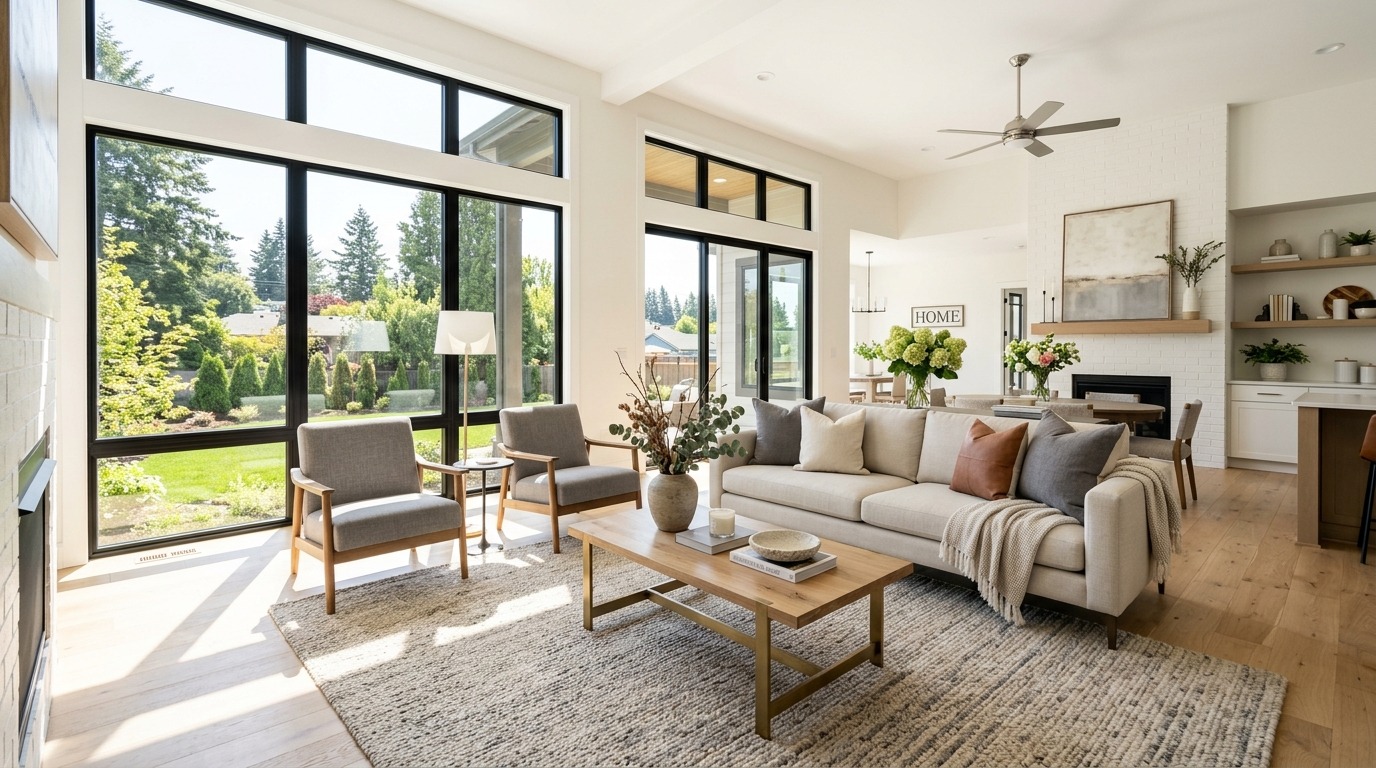
Home staging furniture typically includes the core furniture pieces for each room, plus the soft goods and decor that finish the look. Most rental providers group these into room-by-room sets rather than renting single items, so a living room package includes seating and tables together, not a sofa alone. The exact mix shifts based on whether you're booking a single-room vignette or a full-home package.
Core Furniture by Room
The furniture itself, the larger pieces that anchor a room, makes up the bulk of any rental order.
| Room | Typical Furniture Included |
| Living room | Sofa, accent chairs, coffee table, side tables, area rug |
| Primary bedroom | Bed frame, mattress, nightstands, dresser |
| Dining room | Dining table, dining chairs, sideboard or buffet |
| Kitchen | Counter stools, small accent pieces (cabinets and appliances usually stay) |
| Home office | Desk, desk chair, bookshelf |
Decor and Soft Goods That Complete the Look
Furniture alone rarely finishes a room. Most full-service packages also include rugs, lamps, artwork, pillows, throws, bedding, and greenery, since these soft touches are what make a space feel warm rather than staged. Mirrors are a common add-in, too, since they reflect light and make smaller rooms feel larger.
Full-Home vs. Partial Packages
Most providers offer three tiers: full-home packages that furnish every room, partial packages that fill in gaps around furniture you already have, and room-specific packages that cover only the highest-impact spaces. Choosing the right tier comes down to budget and how empty the property is, since a fully vacant listing usually needs the full package while an occupied home may only need a partial refresh.
Why Does Home Staging Furniture Matter So Much for a Sale?

Staging furniture matters because it directly shapes buyer perception and offer price. Staged homes received offers that were 1% to 10% higher than unstaged comparables, according to 29% of agents surveyed by the National Association of Realtors in its 2025 Profile of Home Staging. On a typical Northeast listing, that swing can represent tens of thousands of dollars.
The effect isn't just about price, either. Buyers' agents overwhelmingly agree staging changes how a property is experienced during a showing:
- 83% of buyers' agents said staging made it easier for a buyer to visualize the property as a future home
- Staging the living room was most important for buyers (37%), followed by the primary bedroom (34%) and kitchen (23%)
- Nearly half of buyers (48%) now expect homes to look as polished as those on home improvement shows
Buyer expectations have risen, which means the furniture itself, not just the empty room, has become part of the sales pitch. Industry estimates put staging ROI between 158% and as high as 1,194% depending on the market, and on a $400,000 home, a 1% to 10% lift in offer price translates to roughly $4,000 to $40,000 in added value.
How Much Does Home Staging Furniture Rental Cost?
Home staging furniture rental typically costs $500 to $600 per room, per month, with full-home packages landing between $1,600 and $2,700. These figures hold steady across national data, though Northeast metro pricing sits at the higher end given square footage and delivery logistics in NYC, NJ, PA, and CT markets.
| Staging Approach | Typical Cost | Best For |
| DIY furniture rental | $100–$300/room/month | Stagers comfortable handling delivery and setup themselves |
| Full-service staging rental | $500–$600/room/month | Stagers who want delivery, placement, and pickup handled |
| Buying new furniture | $2,000+ upfront per room | Stagers planning to reuse the same pieces 10+ times |
| Full-home empty property staging | $1,600–$2,700/month | Vacant listings needing complete furnishing |
These ranges align with HomeAdvisor's 2025 staging cost data, which puts the average at $500 to $600 per room per month for empty properties.
What Drives Staging Furniture Costs Up or Down?
A few factors push pricing higher or lower:
- scope (one room costs less than a full house),
- rental duration (the typical three-to-five month term often costs less per month than open-ended rentals),
- property size,
- market logistics (dense metro delivery and building access),
- and style tier (standard vs. designer-grade pieces).
Furniture Rental vs. Buying for Home Staging: Which Wins?

For most active stagers, furniture rental for staging wins on cost, flexibility, and risk compared to buying. Renting keeps capital free for marketing and client acquisition rather than tied up in depreciating assets, and it means every listing gets fresh, on-trend pieces. Furniture loses value over time, while renting provides ongoing access to refreshed inventory without repair, replacement, or storage costs. Buying only tends to make sense once staging becomes a constant, predictable need across many repeated projects, since one detailed cost comparison found that ownership rarely makes sense for a single listing or short-term use.
When to Rent Furniture for Home Staging
- Confirm your typical project timeline. Most rental terms are built around the standard three-to-five month listing window.
- Calculate your monthly burn rate. Compare rental cost per room against what you need to charge clients to stay profitable.
- Check delivery logistics. Verify the provider services your area, especially across state lines like NY, NJ, PA, and CT.
- Ask about minimum rental terms. Some providers require a three-month minimum, which matters if a home sells fast.
Where to Get Furniture for Home Staging in the Northeast?
The best source for home staging rental furniture is a regional provider who understands fast-turnaround listings and can deliver across multiple states without long lead times. Local providers familiar with NYC walk-ups, NJ suburban homes, and PA and CT single-family markets tend to move faster and price more competitively than national chains for stagers running several projects at once.
Look for a partner like Churchill Furniture Rental that offers full-room packages rather than individual pieces, flexible 1-to-8-month terms that match typical listing timelines, trade or volume pricing for stagers running multiple listings, and delivery logistics built for tight building access in dense urban areas. That combination is exactly the gap a dedicated regional staging-furniture partner fills, handling rental and logistics so stagers can focus on design instead of warehousing inventory themselves.

Risks and Considerations Before You Commit to Staging Furniture
Before locking in a furniture plan, weigh these practical risks stagers run into most often.
- Rental terms outlasting the sale. Three-month minimums mean a home that sells in six weeks can still leave you paying for furniture you no longer need.
- Inventory mismatch. Outdated or overly personal-style pieces can undercut a staging investment if they don't match local buyer expectations.
- Margin compression. Underpricing a job, then absorbing rental costs yourself, erodes profitability across simultaneous projects.
- Delivery timing. Tight closing windows leave little room for delays, especially with limited parking or freight access in dense cities.
- Damage and liability. Clarify upfront who covers damage to rented pieces during high-traffic open houses.
Staging furniture should reduce financial risk for a listing, not add a new one, and the right rental terms are what make that true.
The Bottom Line for Home Stagers in 2026
The strongest insight here is simple: home staging furniture rental consistently beats buying on cost and flexibility for most stagers, and the data backs up why staging itself remains worth the investment. With nearly half of sellers' agents observing reduced time on market and offer prices climbing on staged homes, the upside is well established. What separates profitable staging businesses from struggling ones is usually the furniture sourcing strategy underneath it all, since renting keeps capital free and scales with however many listings you're juggling across NYC, NJ, PA, and CT.
Ready to furnish your next listing without the upfront cost of buying inventory? Rent quality staging furniture for your next project and keep your business moving from listing to listing.
Frequently Asked Questions
How much does home staging furniture rental typically cost per month?
It generally runs $500 to $600 per room for full-service packages, or $100 to $300 per room for DIY options. Full-home packages for empty properties typically land between $1,600 and $2,700 per month. Pricing depends on room count, style tier, and how much delivery and setup the provider handles.
Will renting furniture for home staging help my listings sell faster?
Yes, nearly half of sellers' agents reported that staging reduced time on market in NAR's most recent survey. Rental furniture lets you furnish a listing quickly, without waiting on a purchase or delivery from a furniture store. That speed matters most for vacant homes, where buyers struggle to picture scale and flow without it.
Can I get furniture for home staging on a short-term basis?
Most providers offer terms from one to eight months, matching typical listing timelines. Some require a three-month minimum, so it's worth confirming the policy before booking if your market tends to move fast. Aligning the rental term with your expected days on market helps avoid paying for furniture after a home has already sold.
Is it better to buy or rent furniture for home staging?
Renting is almost always more cost-effective for individual listings, since it avoids tying up cash in depreciating assets. Buying only makes sense once you're staging consistently enough to spread ownership costs across many projects over time. Most stagers running fewer than a handful of active listings at once come out ahead by renting.
What rooms should I prioritize when staging with rental furniture?
Focus on the living room, primary bedroom, and kitchen first, since these are the spaces buyers weigh most heavily during a showing. They were rated most important by 37%, 34%, and 23% of buyers, respectively. Staging these rooms well, even if budget limits a full-home furnish, tends to deliver the strongest return.
Does home staging furniture actually increase the sale price?
Yes. About 30% of real estate professionals reported that staging boosted home values by 1% to 10% compared to similar unstaged homes. On a typical Northeast listing, that lift can translate into a meaningful jump in the final offer. The effect tends to be strongest when furniture matches the style and scale buyers expect in that neighborhood.
How do I find a furniture rental company that covers multiple states?
Look for regional providers who explicitly service your area rather than relying on national chains alone. This matters especially across NYC, NJ, PA, and CT, where delivery logistics and building access vary widely by market. A provider familiar with that footprint can usually move faster and price more competitively than a one-size-fits-all national service.
